Naming |
| Botanical Name: |
Lavandula angustifolia
|
| Common Names: |
lavender; Common Lavender; True Lavender; Garden Lavender
|
| Key Name: |
English Lavender
|
| Parts Used: |
Flowers, leaves, essential oil
|
| Sister Plants: |
Lavandula dentata, Rosmarinus officinalis, Salvia officinalis
|
| Comments: |
Perennial shrub highly attractive to pollinators; thrives in sunny, well-drained areas
|
Taxonomy |
| Kingdom |
Viridiplantae |
Phylum |
Streptophyta |
| Class |
Magnoliopsida |
Order |
Lamiales |
| Family |
Lamiaceae |
Genus |
Lavandula |
| Species |
angustifolia |
NCBI Tax ID |
39329
|
| Organism |
Lavandula angustifolia
|
|
Characteristics |
| Identifying Character: |
Perennial shrub (1-3 ft), woody base, erect stems, narrow linear Leaves with gray-green hue, purple flower spikes (1-2 in), blooming summer
|
| Stem: |
Erect, 1-3 ft, woody at base, gray-green
|
| Leaves: |
Narrow, linear, 1-2 inches, gray-green, Aromatic
|
| Flowers: |
Purple flower spikes, 1-2 in, blooming June-August
|
| Fruit: |
Small nutlets, 2-3 mm, enclosed in calyx
|
| Taste: |
Bitter (Leaves), Aromatic (flowers)
|
| Odour: |
Strong, floral scent from flowers
|
| Root: |
Woody taproot, supports drought tolerance
|
| Image: |
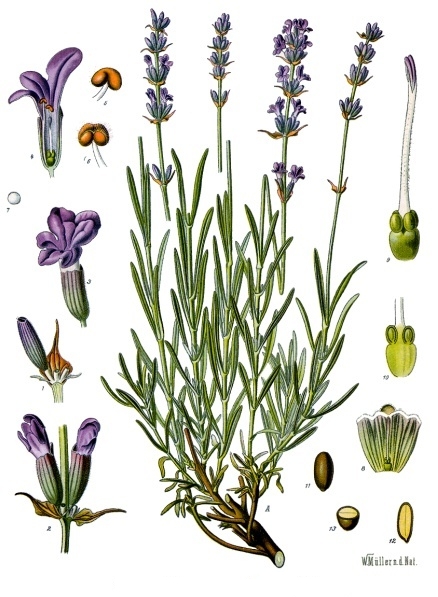
Lavandula angustifolia
Wikipedia
|
Distribution |
| Distribution: |
Native to the Mediterranean, cultivated worldwide
|
| Cultivation: |
Plant in full Sun, well-drained soil; sow seeds in spring or propagate cuttings; space 12-18 inches apart; water sparingly, tolerates drought
|
| Harvest: |
flowers: Summer (June-August); Leaves: Year-round
|
Medical |
| Therapeutic Action: |
Calmative, Anti-inflammatory, Antiseptic, Carminative
|
| Medical Uses: |
Used for anxiety, Insomnia, headaches, Inflammation, minor burns, and Digestive issues; oil for aromatherapy and skin care
|
| Constituents: |
Linalool, linalyl acetate, camphor, Tannins
|
| Solvents: |
Water, alcohol (Tincture), oil (distillation)
|
| Dosage: |
infusion: 1 tsp dried flowers in hot water, 1-2 times daily; Oil: 2-3 drops in carrier oil
|
| Administration: |
Internal: infusion; External: Oil or poultice
|
| Formulas: |
|
| Contraindications: |
May cause Allergic reactions; avoid during Pregnancy; consult healthcare provider with low Blood pressure
|
| Preparation: |
infusion: Steep 1 tsp dried flowers in hot water 10 min; Oil: Steam distill flowers
|
| Chinese: |
No documented use in Traditional Chinese Medicine
|
| Veterinary: |
Used for calming effects or skin irritations in livestock
|
| Homeopathic: |
No known homeopathic use documented
|
Pollination and Pollinators |
| Apis: |
No
|
| Pollinator: |
1
|
| Pollen: |
Yes
|
| Pollen Notes: |
Pollen attracts bees, butterflies; some self-pollination
|
| Nectar: |
Yes
|
| Nectar Notes: |
Nectar-rich, attracts bees, butterflies, late-season pollinators
|
Other |
| Non-Medical Uses: |
ornamental, essential oil, sachets, insect repellent
|
| Culinary Uses: |
flowers in teas, baked goods, or as flavoring
|
| History: |
Used in Mediterranean and European herbal traditions since ancient times; popularized in perfumery
|
| Reference: |
Plants For A Future; USDA NRCS
|
| URL: |
https://www.pfaf.org/user/Plant.aspx?LatinName=Lavandula+angustifolia
|
| Share: |
Private
|